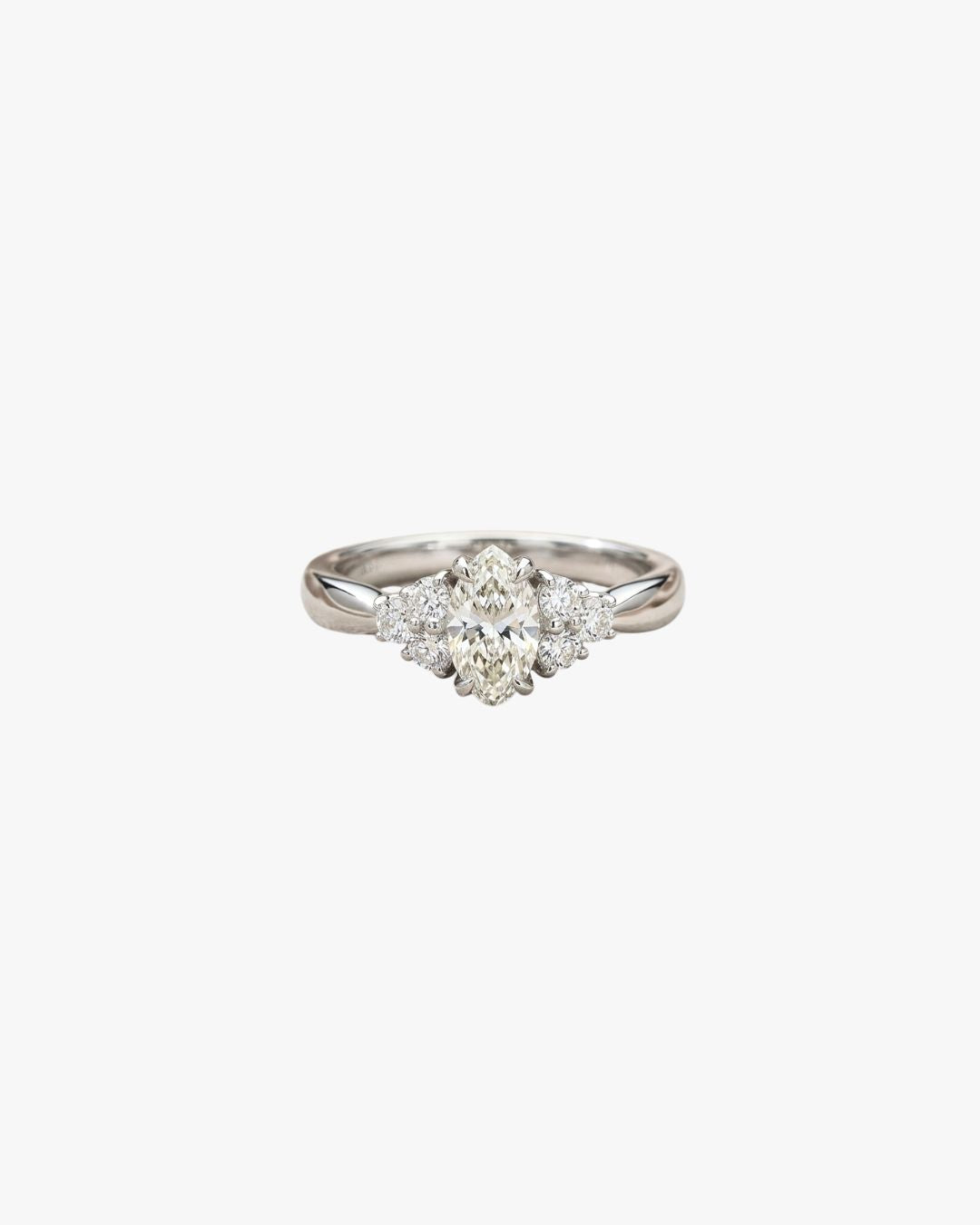
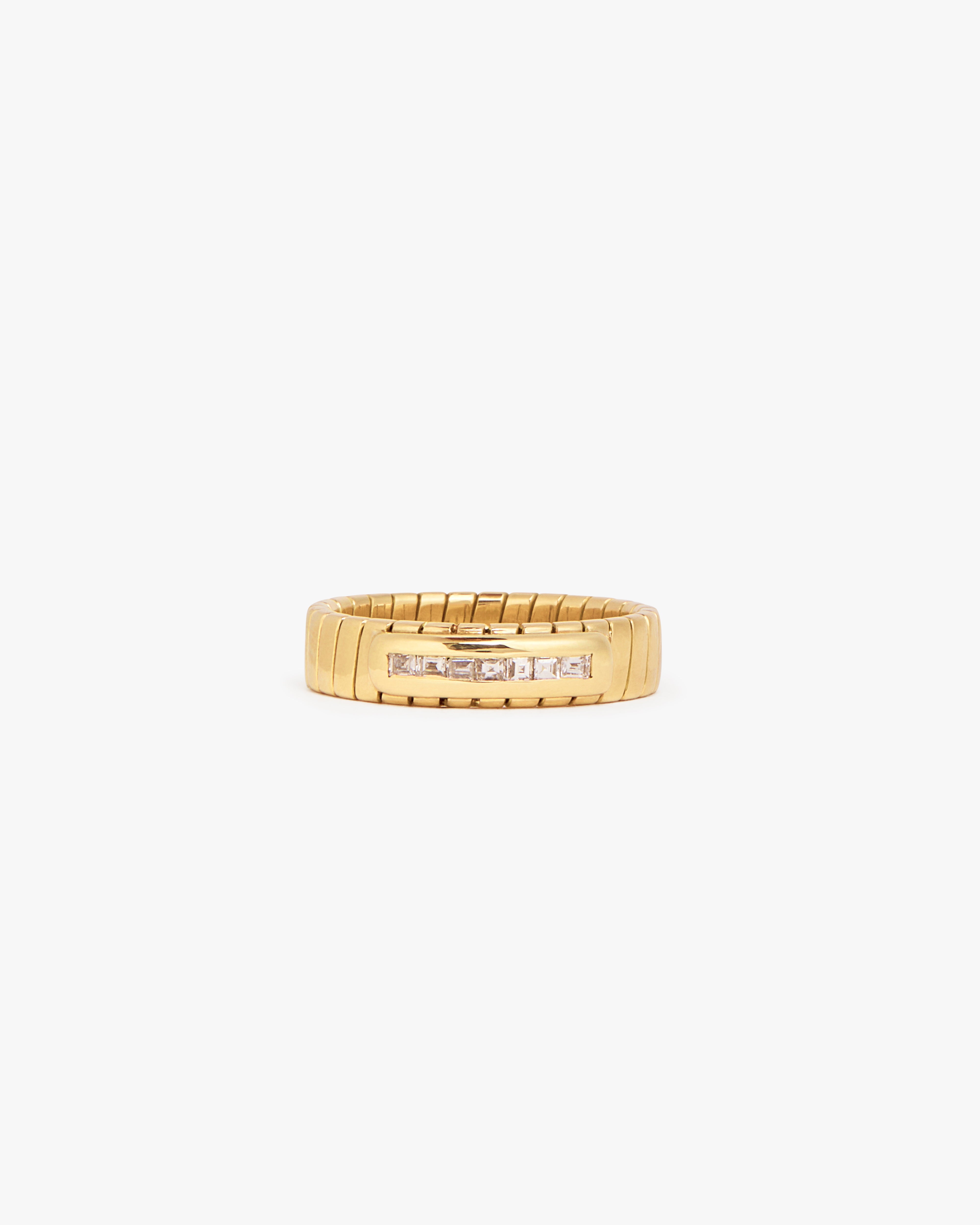
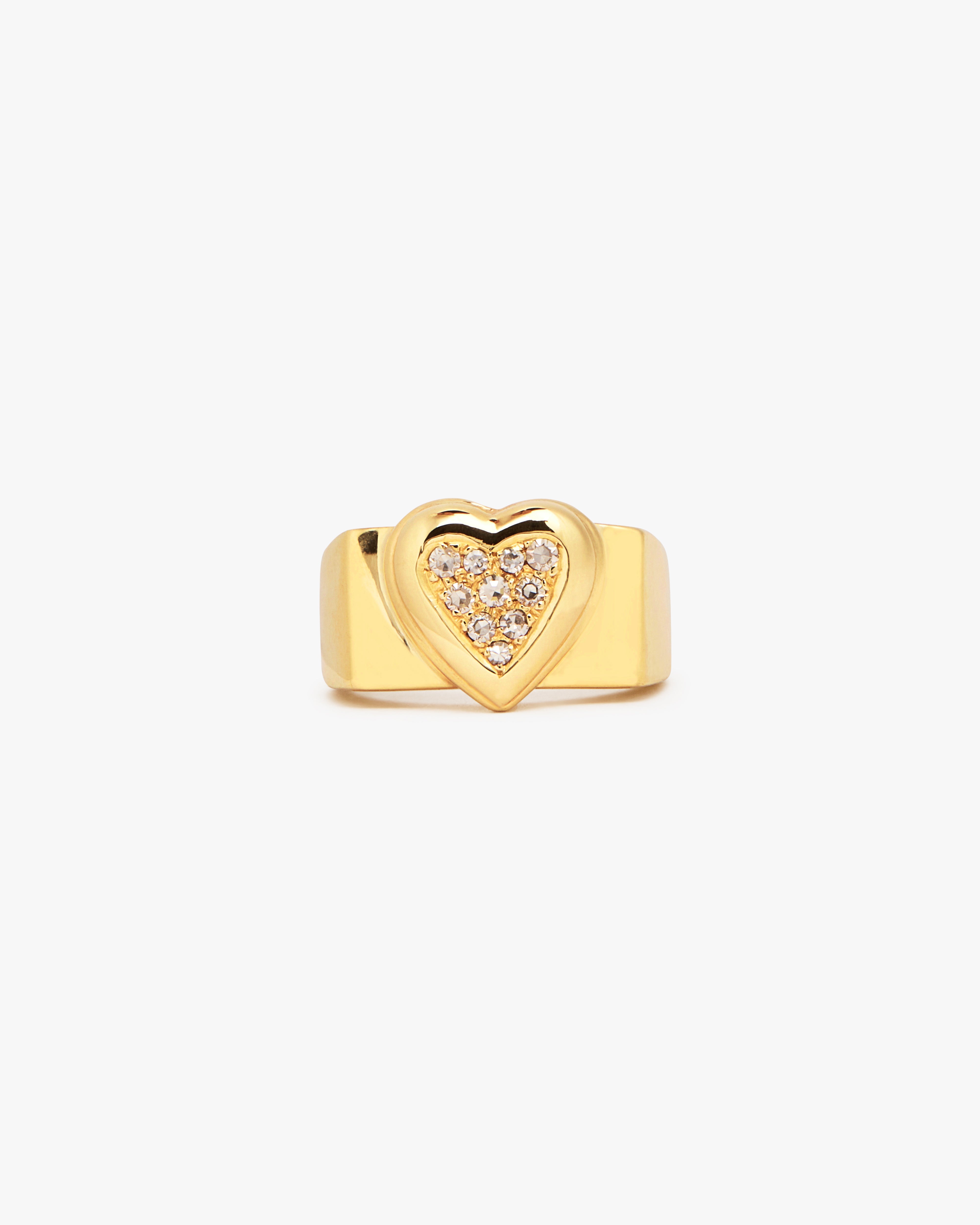
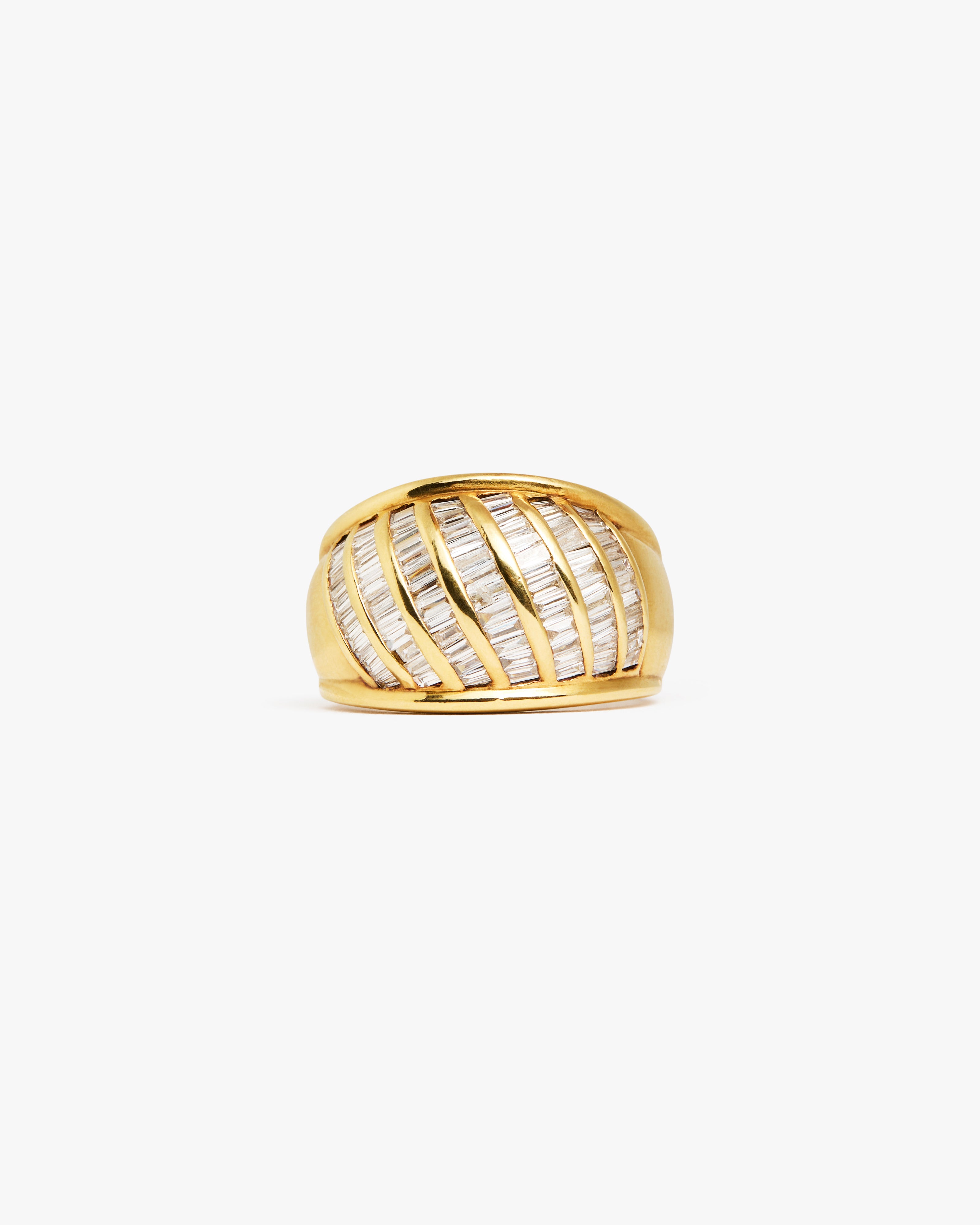
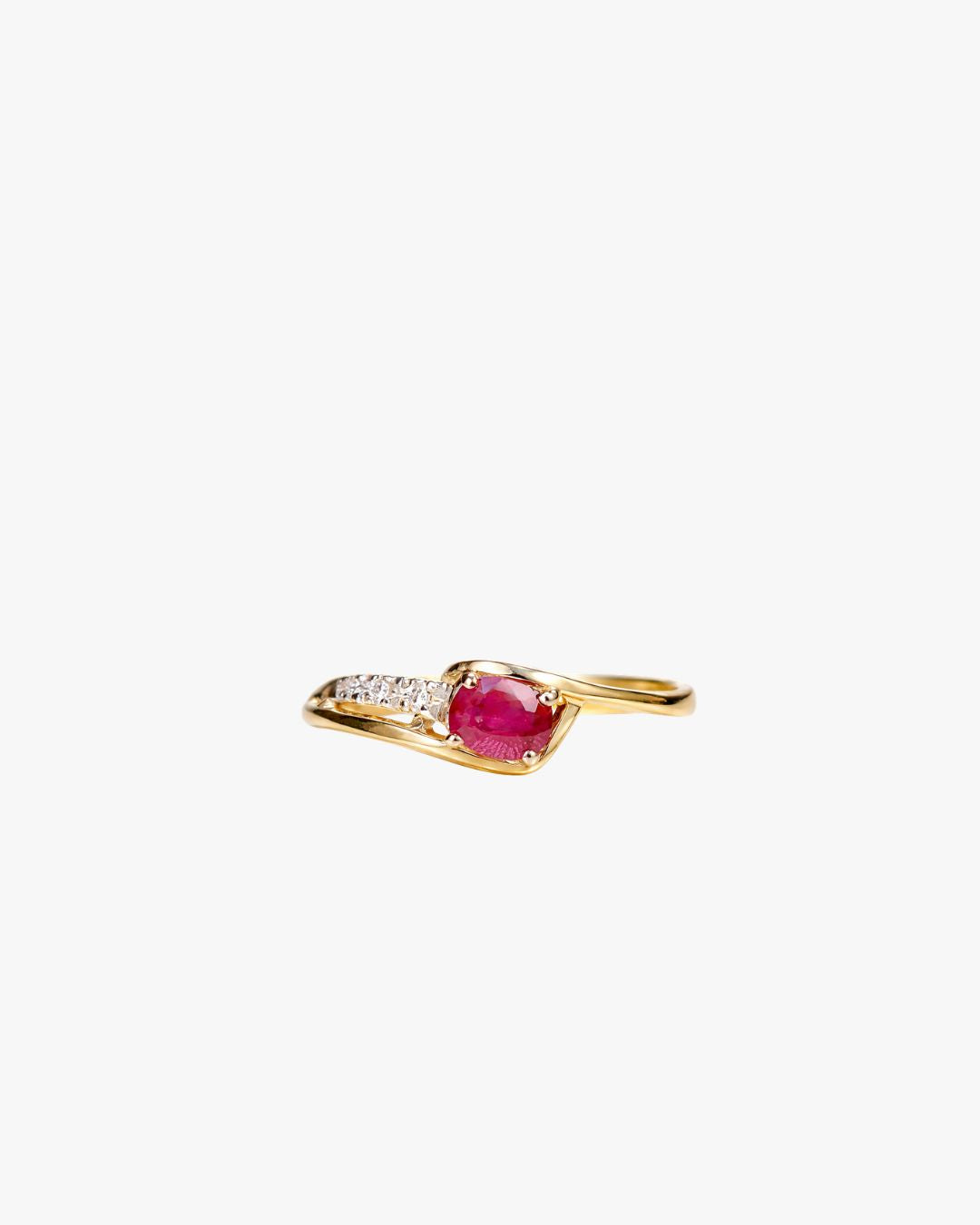
Victorian (1837–1901): the romantic era
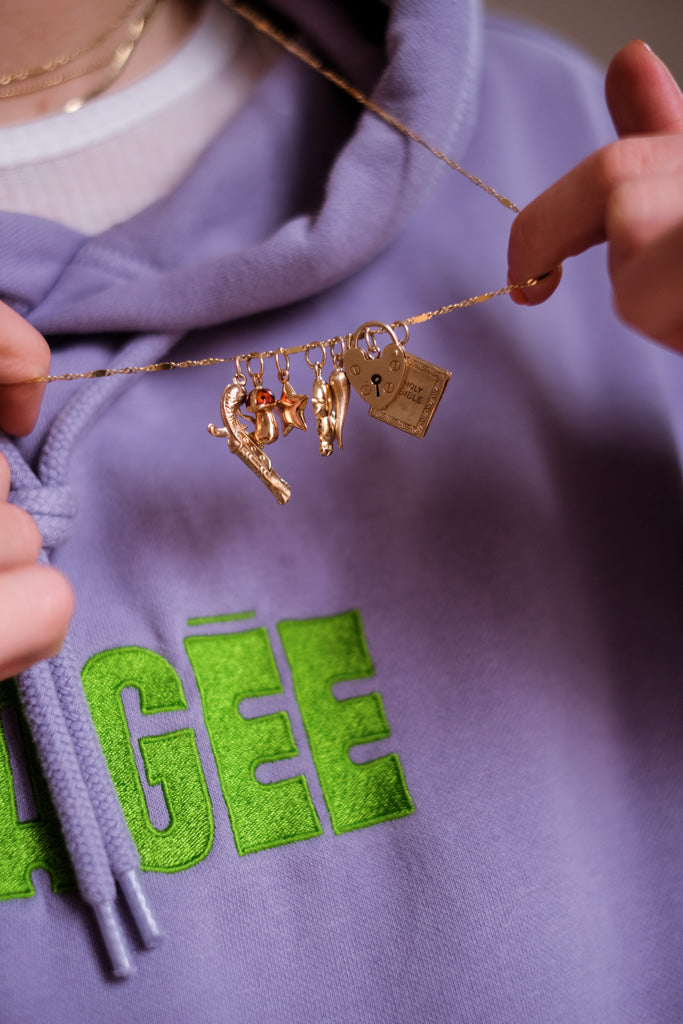
Victorian rings are sentimental objects before they are ornaments. This is the age of warm yellow gold, of snake rings (Queen Victoria herself received one as an engagement ring), of hearts, flowers and acrostic settings where the first letters of the stones spell out a word. Diamonds appear as rose cuts and old mine cuts: shaped by hand, slightly irregular, made to flicker in candlelight rather than blaze under shop lighting.
• Typical cuts: old mine cut and rose cut diamonds, often set in clusters
• Typical stones: garnets, turquoise, pearls, and later sapphires alongside diamonds
• Typical look: engraved yellow gold, symbolic motifs, intimate scale
Who it is for: someone who reads meaning into objects, prefers warm metal against the skin, and would rather wear a ring with a private language than a large stone.
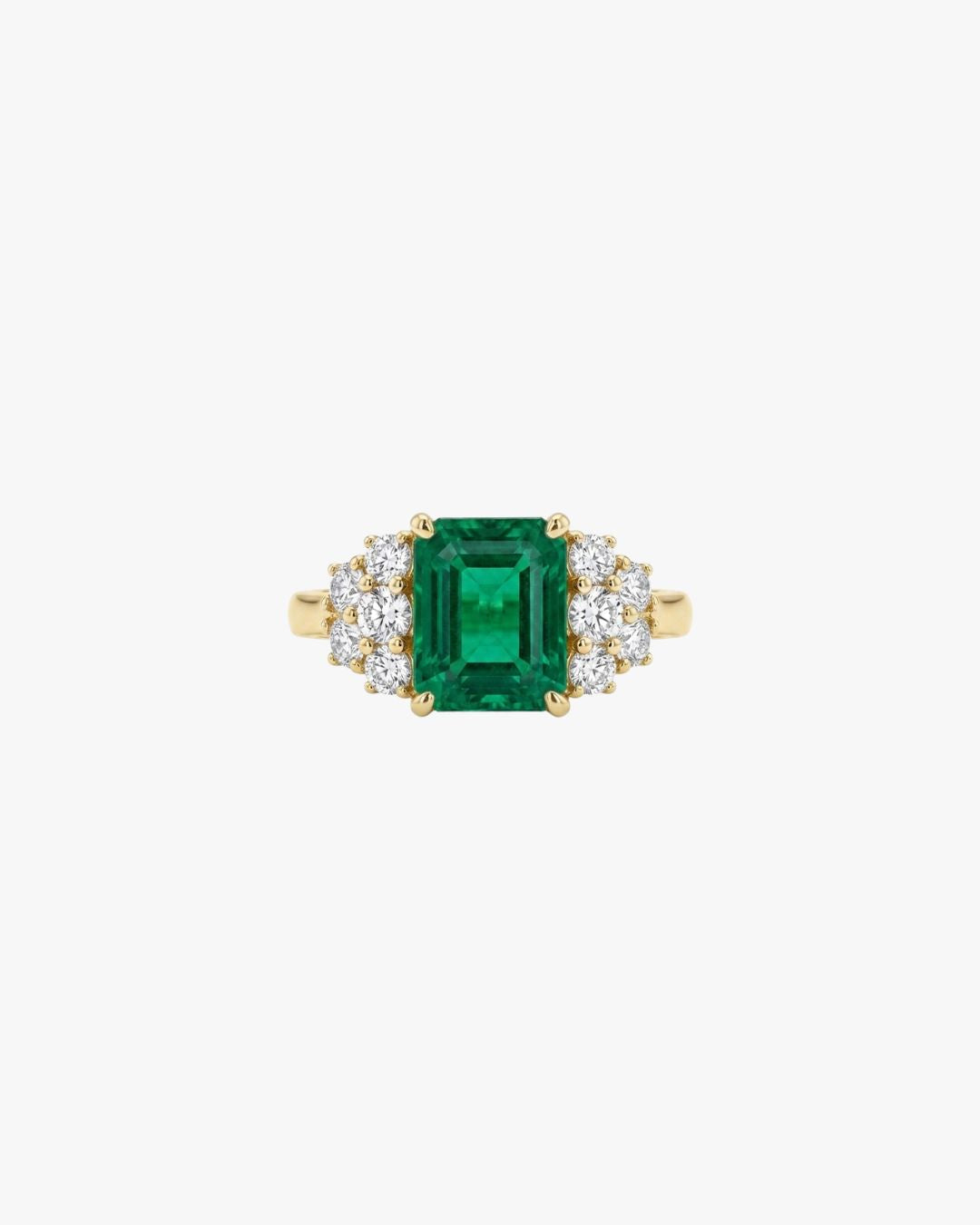
Edwardian (1901–1915): platinum and air
The Edwardian era is when platinum enters jewellery, and it changes everything. Strong enough to be worked almost impossibly thin, it allowed settings that resemble lace: open metalwork, garlands, ribbons and bows, with edges finished in millegrain, that row of minute beads that softens every line. Old European cut diamonds sit in mountings so light the stone appears to float above the finger.
• Typical cuts: old European cut diamonds, rose cut accents
• Typical look: white-on-white platinum work, filigree, millegrain borders
• Typical character: delicate, precise, quietly formal
Who it is for: someone who wears white metals, notices detail at close range, and wants refinement without weight. Edwardian rings reward people who look twice.
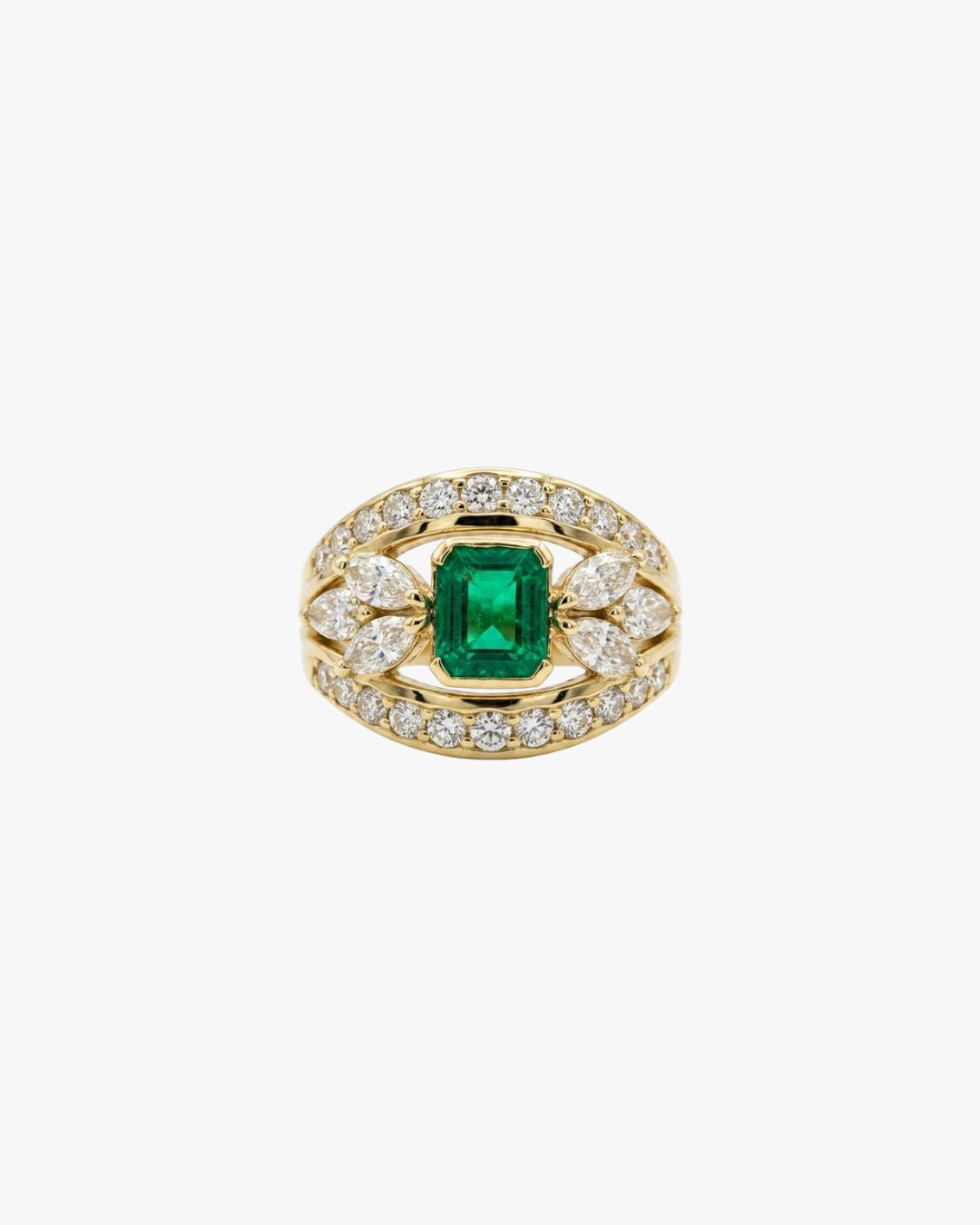
Art Déco (1920s–1930s): geometry as romance
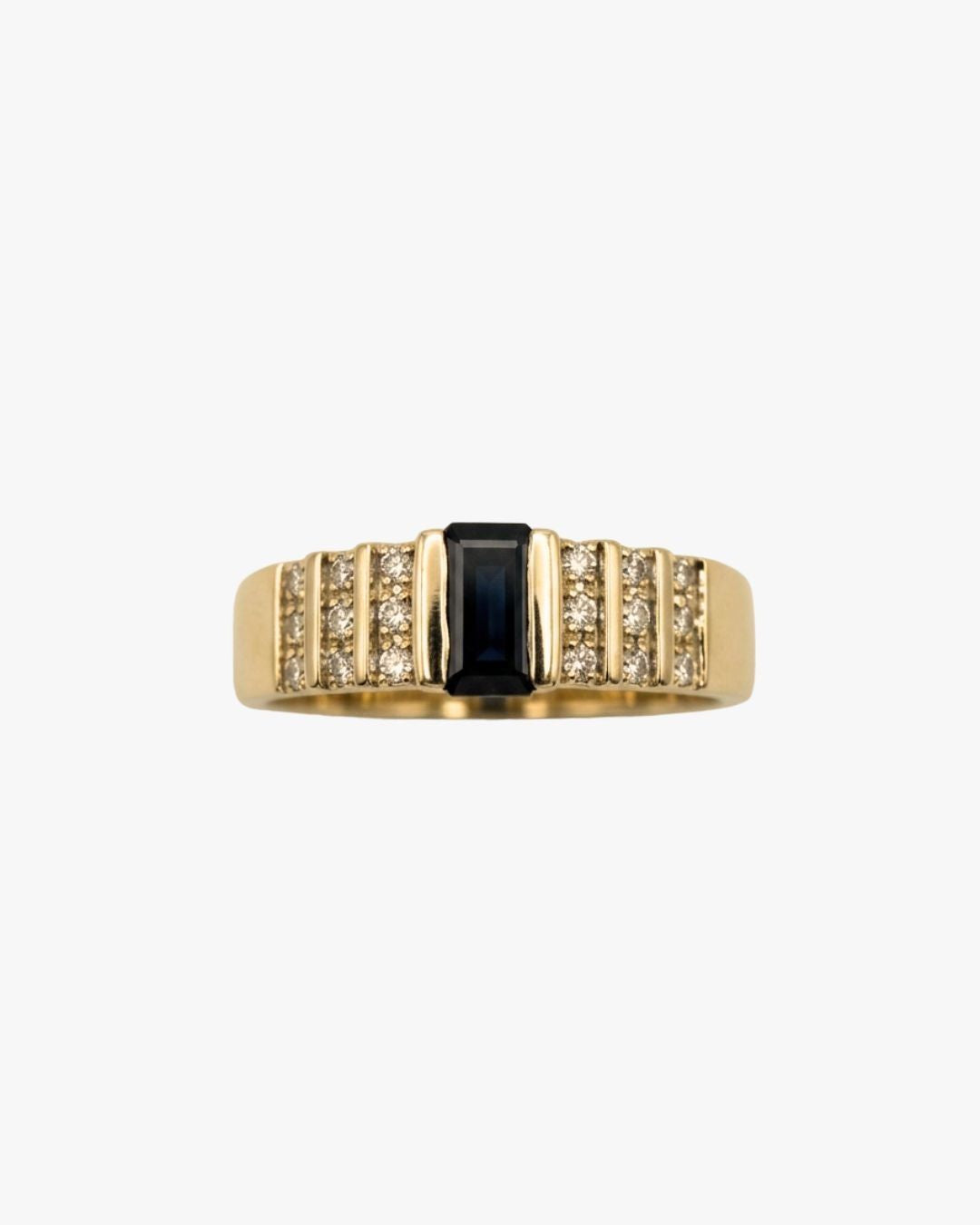
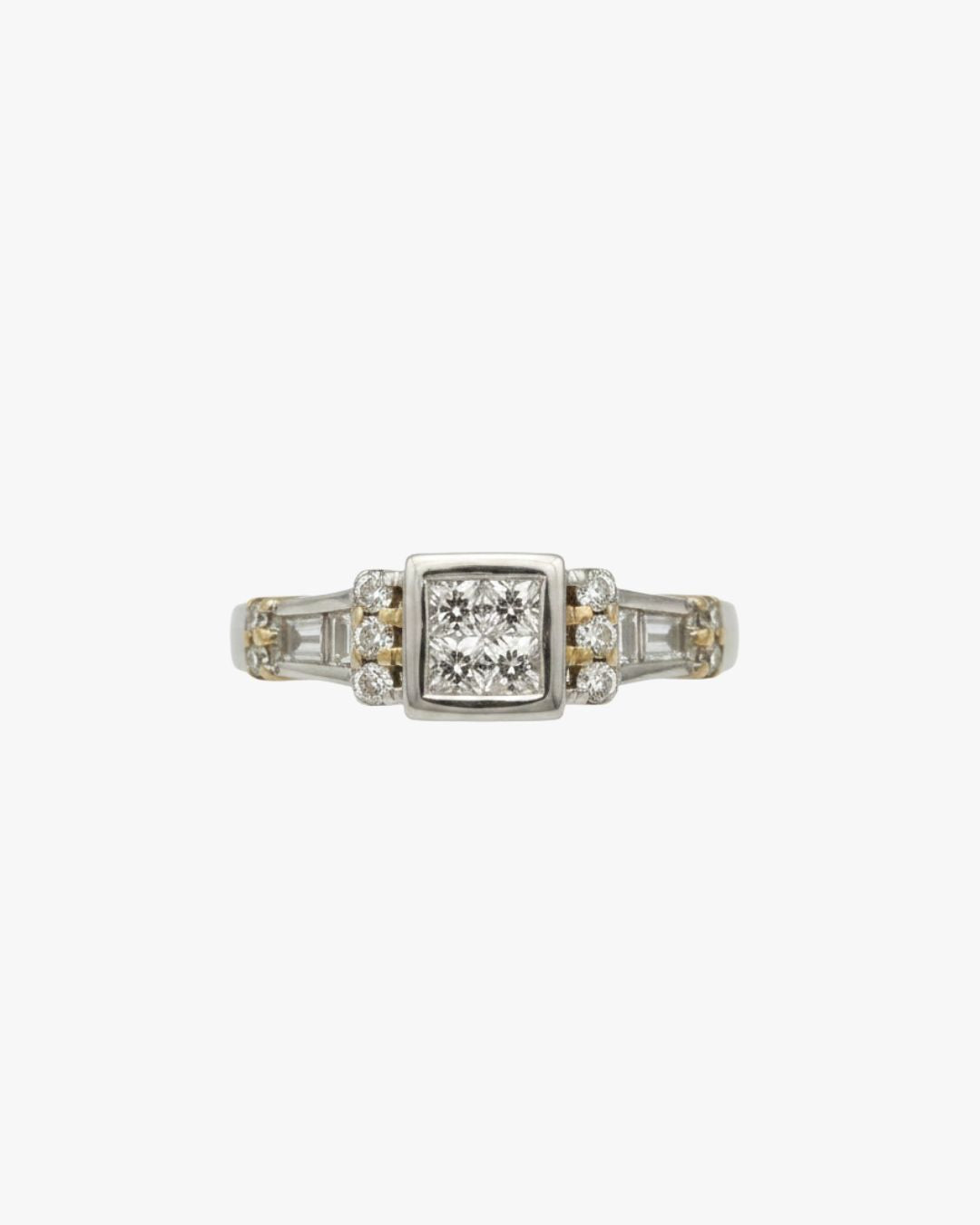
Art Déco rings replaced the garland with the grid. Symmetry, strong outlines, stepped shoulders and hard contrasts define the period: a diamond framed by calibré-cut sapphires or onyx, baguettes flanking a central stone, platinum drawn into architecture rather than lace. These are rings with a plan. We take the style apart piece by piece in Art Déco, decoded.
• Typical cuts: old European cut and transitional-cut diamonds, baguettes, calibré-cut coloured stones
• Typical look: platinum or white gold, geometric frames, black-and-white or blue-and-white contrast
• Typical character: graphic, deliberate, modern a century later
Who it is for: the modernist. Someone with graphic taste, a tailored wardrobe, and no patience for frills. If they love clean architecture, they will love Art Déco.
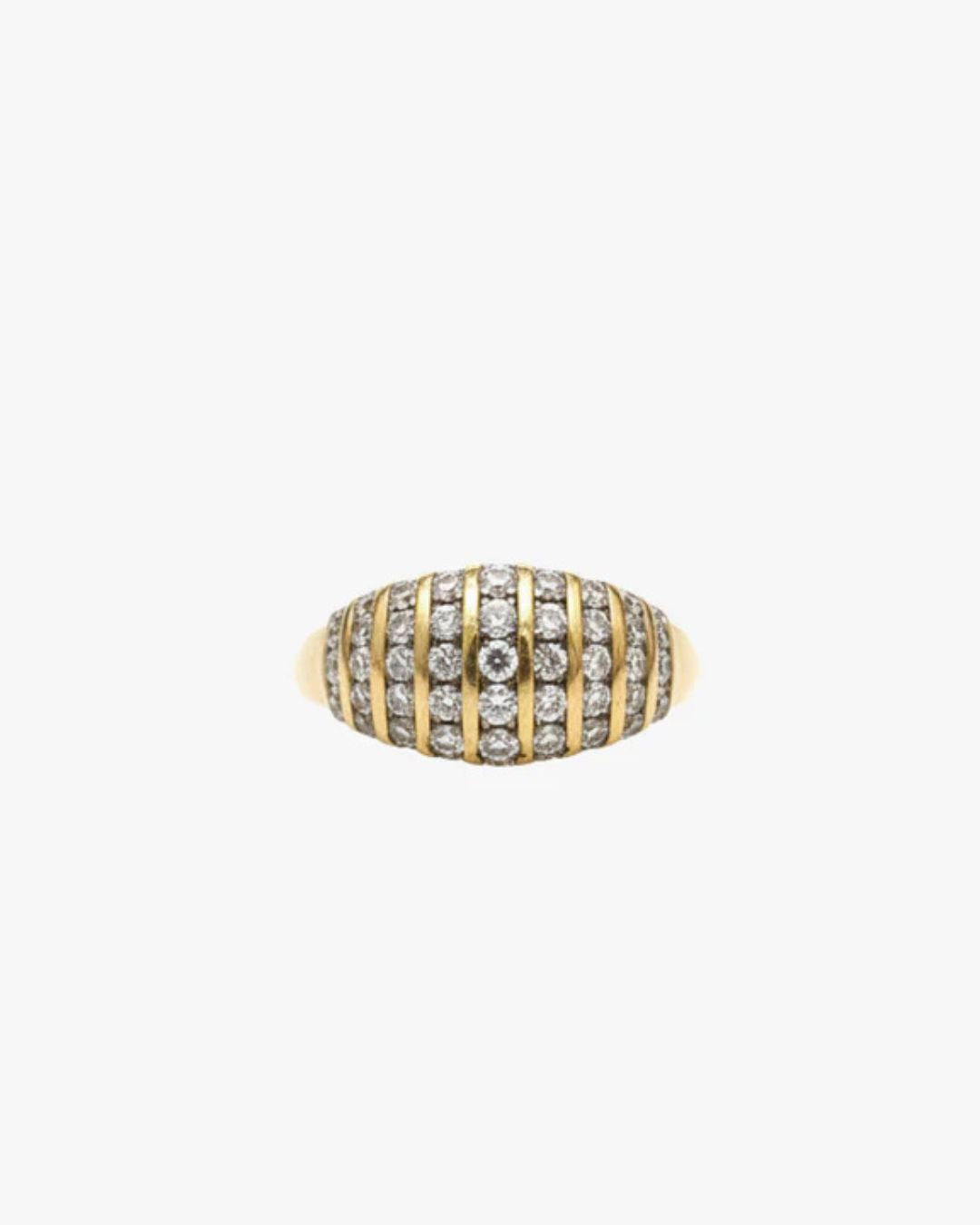
Retro and the 1940s–50s: gold, volume, confidence
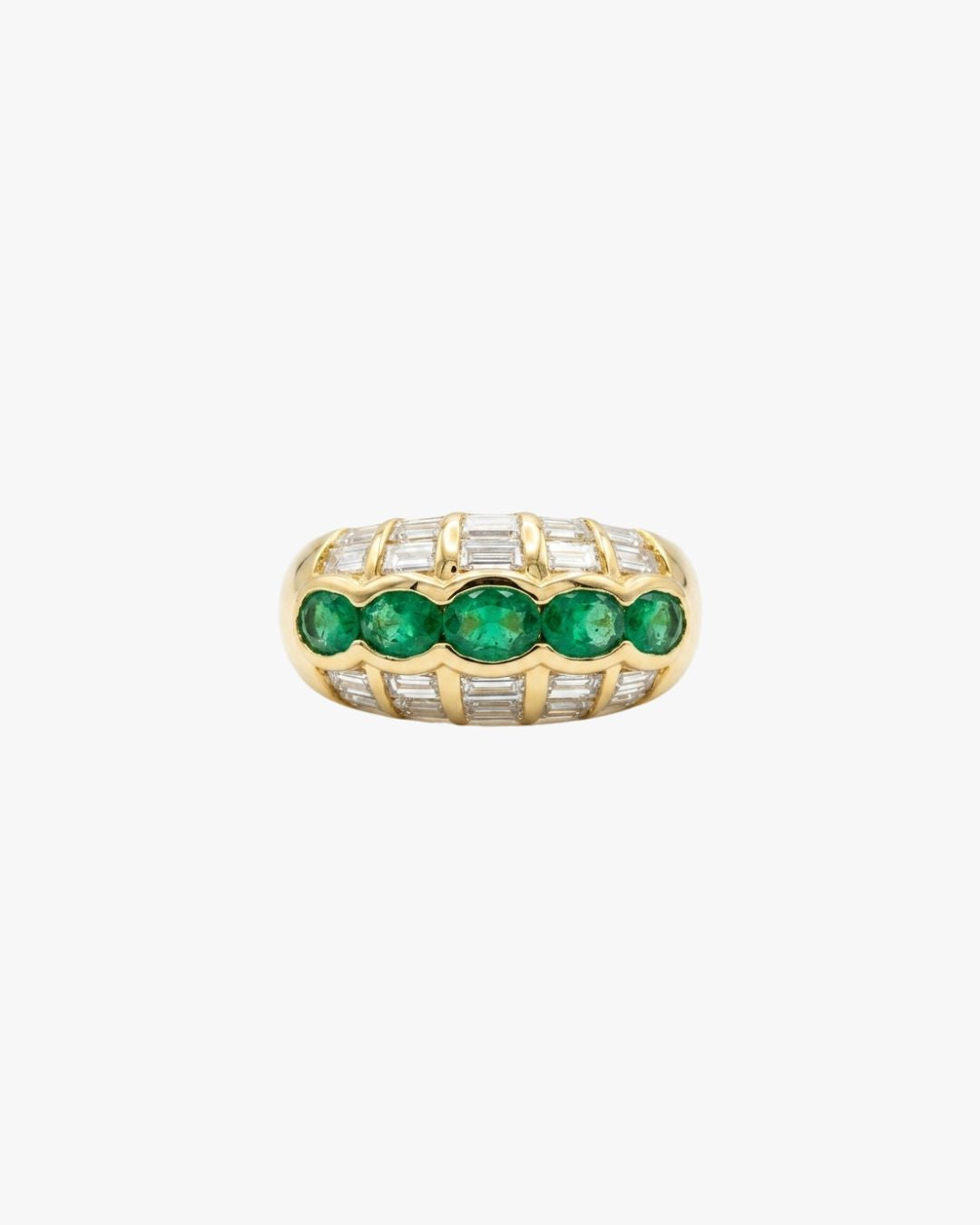
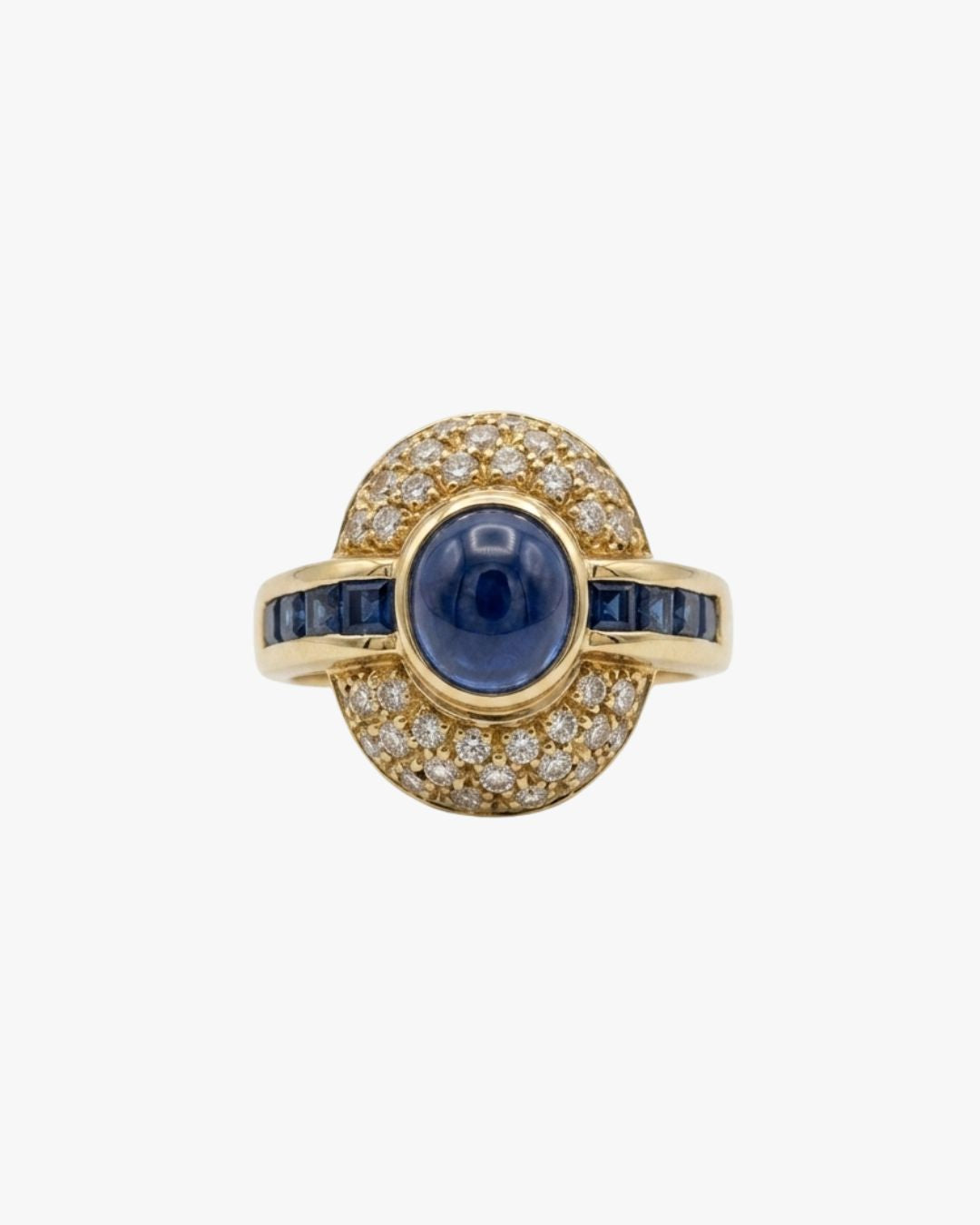
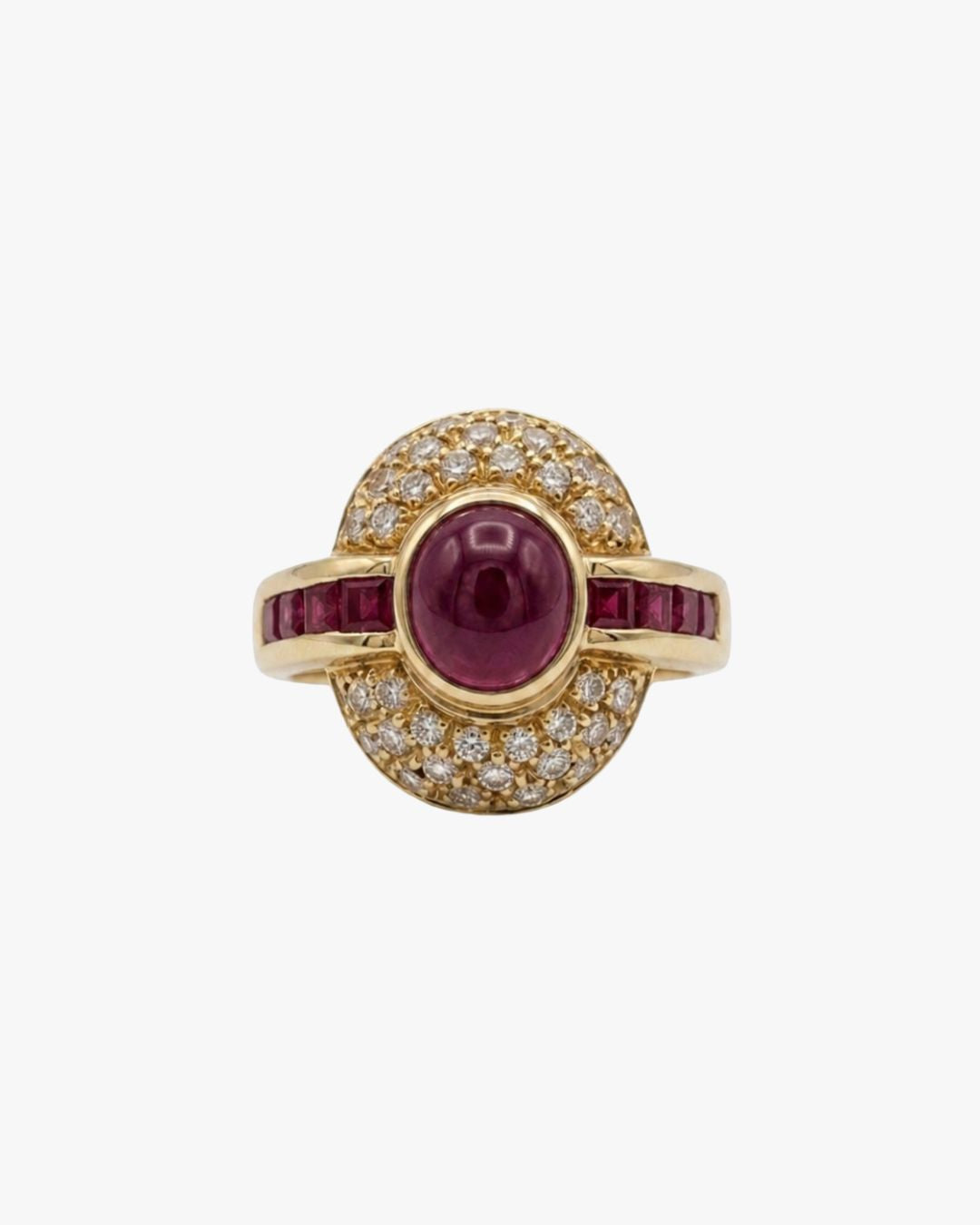
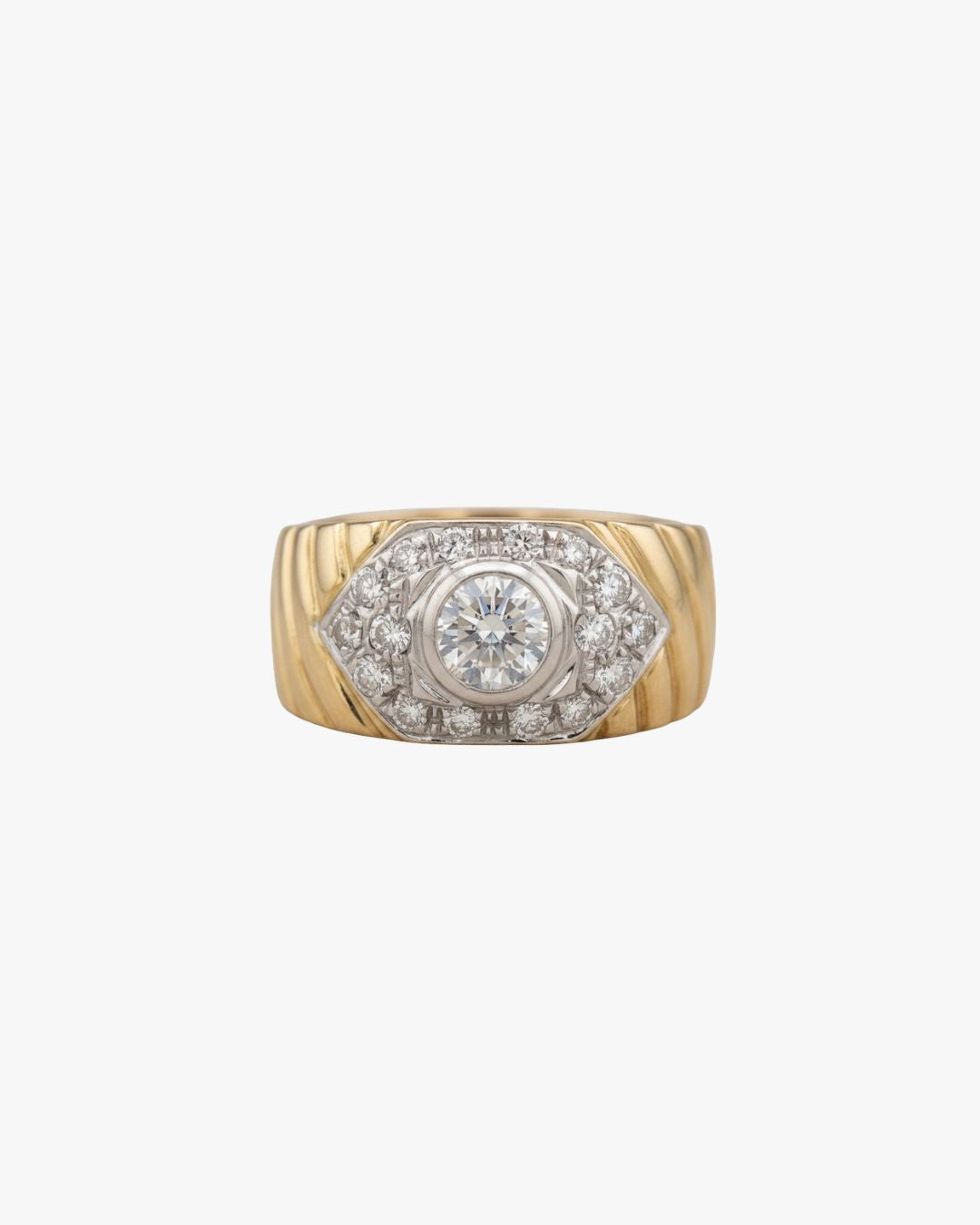
Wartime restrictions pushed platinum out and yellow and rose gold back in, at a much larger scale. Retro rings are sculptural: bold scrolls, bombé domes, cocktail-sized coloured stones, gold treated as a material to be shaped rather than hidden. Where Edwardian rings whisper, these announce themselves across the room.
• Typical look: high-volume yellow or rose gold, asymmetric and sculptural forms
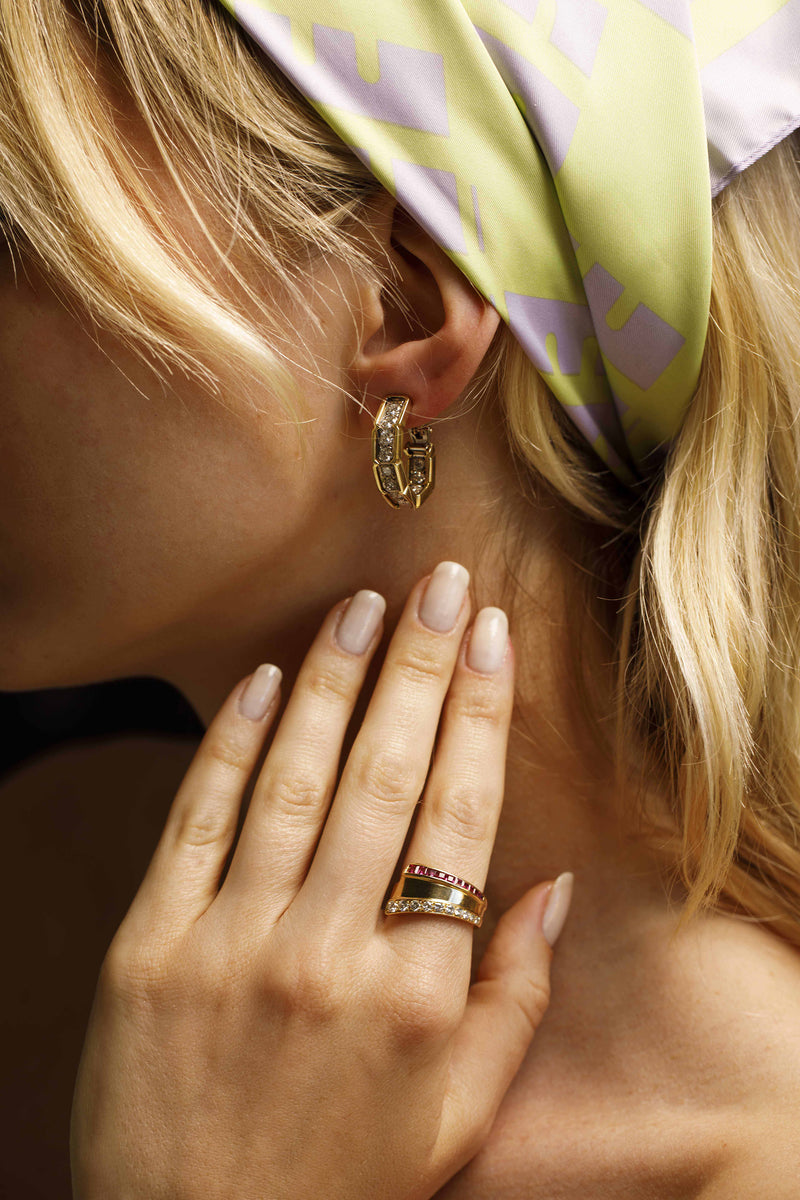
• Typical stones: large coloured centres (citrines, aquamarines, rubies) and diamond accents
• Typical character: theatrical, warm, unapologetic
Who it is for: someone who wears jewellery to be seen wearing it. A sciura in the making. If a solitaire feels too quiet for them, start here.
Before you choose: three practical rules
Measure first. Ring sizes are the most common reason a proposal plan goes sideways. Borrow a ring they wear on the correct finger, or use our ring size guide before you commit.
Resizing is possible, within limits. A plain gold or platinum shank can usually be adjusted. Rings with calibré-set shoulders, continuous engraving or stones running around the band can only move a little, or not at all. Ask before you buy, not after.
Insist on documentation. With vintage jewellery, paperwork is what separates a documented ring from an anecdote. Every ring at ÂGÉE is one-of-a-kind, scouted by our founder Veronica Varetta, checked by a gemmologist and documented through its hallmark and provenance before it reaches our showroom at LIL House, Via Gaetano Donizetti 36, in Milan, Italy.
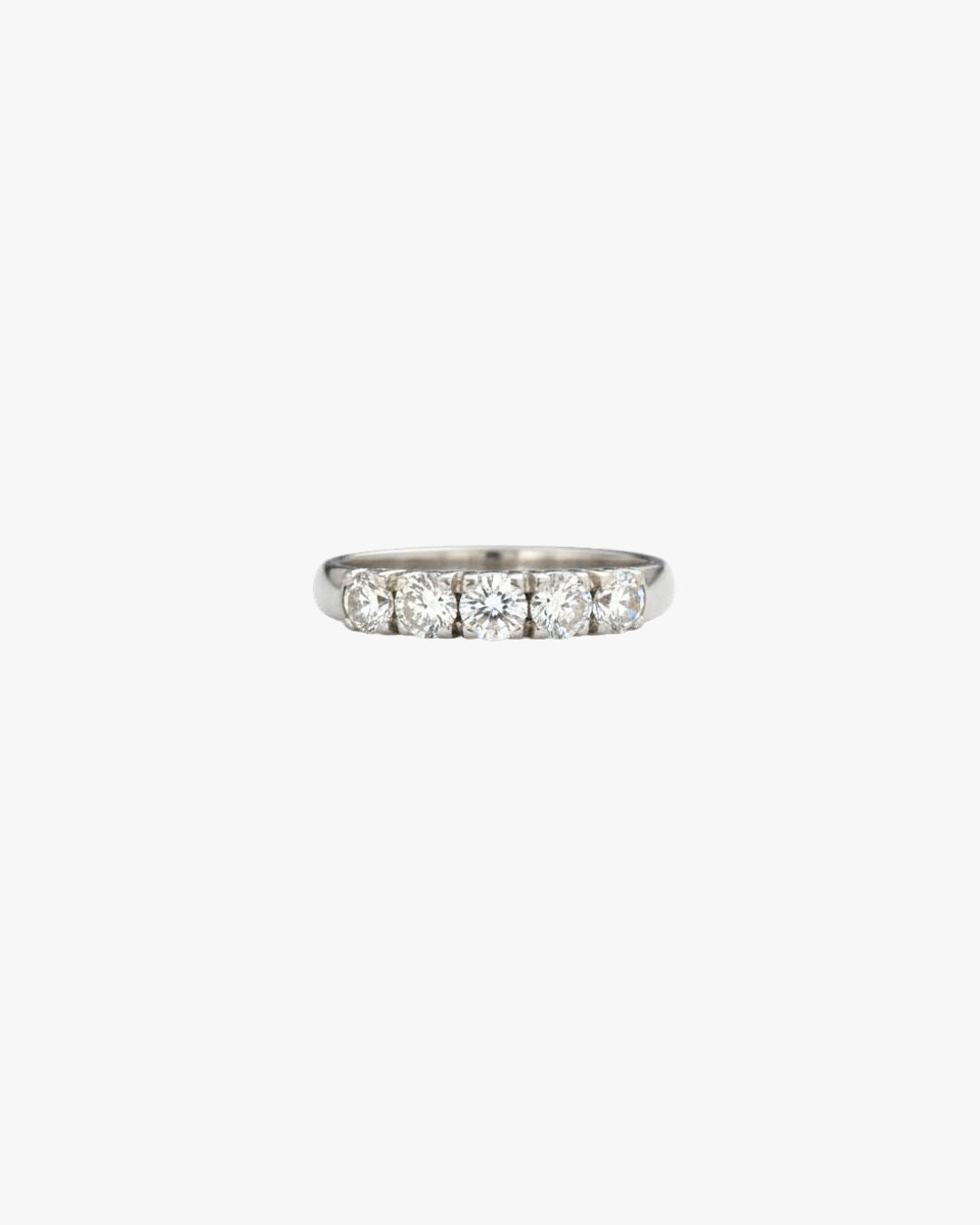
When you know which era fits, the rest is patience. Our current engagement rings span all four, each one a single ring, from a single moment.