Every ÂGÉE piece belongs to an era, and every era has a grammar: a way of cutting stones, holding them, finishing an edge. This is the short guide we use when we read a jewel: dates first, character second.
Handmade before industrialisation: closed-back settings, foiled stones, nature motifs. Survivors are rare (gold was often reused), which makes documented Georgian pieces some of the most precious on the market.
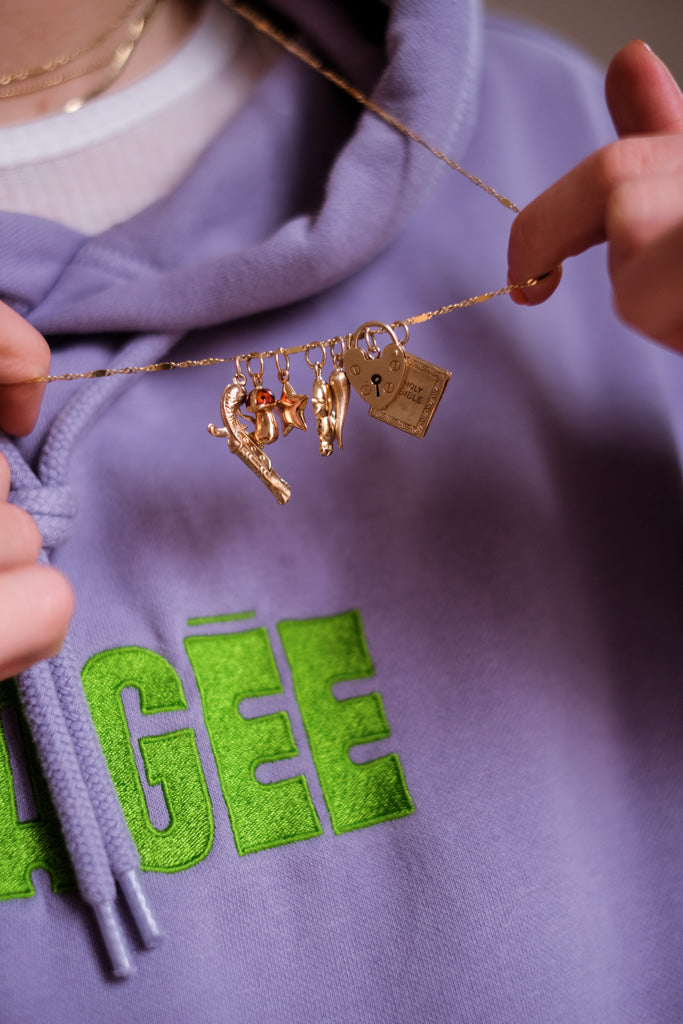
The long era of Queen Victoria: sentimental lockets, snakes as symbols of eternal love, mourning jewellery in jet, and later bold gold work. Romantic, symbolic, deeply personal.
Nature drawn in curves: dragonflies, orchids, female profiles, enamel work. A short, visionary movement. Original pieces are highly collectible.
Lightness above all: platinum lace, garlands, bows and millegrain detail, often set with old European cut diamonds. Elegant, airy, aristocratic.
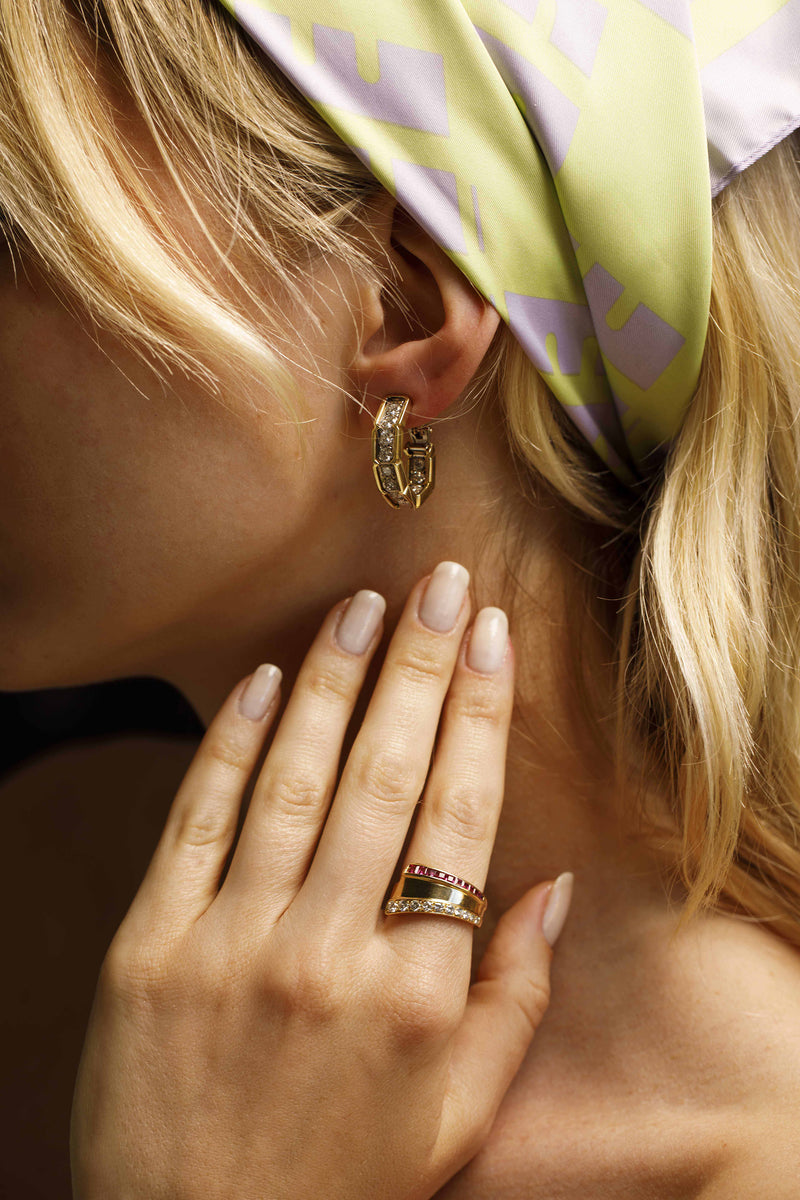
Geometry organising light: calibré-cut emeralds and sapphires, old European cut diamonds, strong symmetry, platinum and white gold. The most requested vintage era, and the most imitated, which is why documentation matters. We decoded it signal by signal here.
Bold volumes in yellow and rose gold, tank bracelets, oversized cocktail rings. Glamour built during hard times: sculptural and confident.
Post-war joy: textured gold, animal brooches, turquoise and coral, playful volumes. The era of the great Italian goldsmiths.
Bold gold, tubogas, strong lines and cocktail stones, pieces made for presence. Recent enough to wear daily, old enough to be one of one.
Every era in the archive is read the same way: hallmark first, construction second, provenance always. How we do it is on Our Method.